

A cracked tooth can sometimes be saved with a root canal, but it depends on the location and depth of the crack. If the crack reaches the pulp, root canal therapy can remove the damaged or infected tissue, and a crown can help protect the tooth. However, if the crack extends below the gumline or the tooth has split, the tooth may not be savable and could require extraction.
When can a root canal save a cracked tooth?
A root canal for a cracked tooth may be recommended when the inner pulp (the soft tissue inside the tooth) becomes inflamed or infected, but the tooth structure can still be restored. The American Association of Endodontists lists root canals with crowns as a viable treatment in these cases.1
A root canal and crown may help save your cracked tooth if:
- The crack reaches the pulp
- You have lingering sensitivity to hot or cold
- The tooth hurts when biting or chewing
- Pain comes and goes, but continues returning
- There are signs of infection
- The tooth can still support a crown
- The crack has not extended below the gumline
- The tooth has not split into separate pieces
During root canal therapy, the damaged pulp is removed, the inside of the tooth is cleaned and sealed, and the tooth is restored, helping preserve your natural tooth whenever possible.
When can a cracked tooth not be saved?
Not every cracked tooth can be preserved. In some cases, the damage is too extensive for treatment to be successful. A cracked tooth may not be savable if:
- The crack extends below the gumline
- The crack reaches deep into the root
- The tooth has split into separate parts
- There is a vertical root fracture
- There is severe bone loss or gum damage
- The tooth cannot support a crown
- The fracture pattern limits long-term success
In these situations, even a root canal and crown may not be enough to restore function. An endodontist may recommend extraction instead.
Types of cracked teeth and how treatment can vary
Understanding the type of crack can help your endodontist determine whether a root canal and crown—or another treatment—can be used to save a cracked tooth.
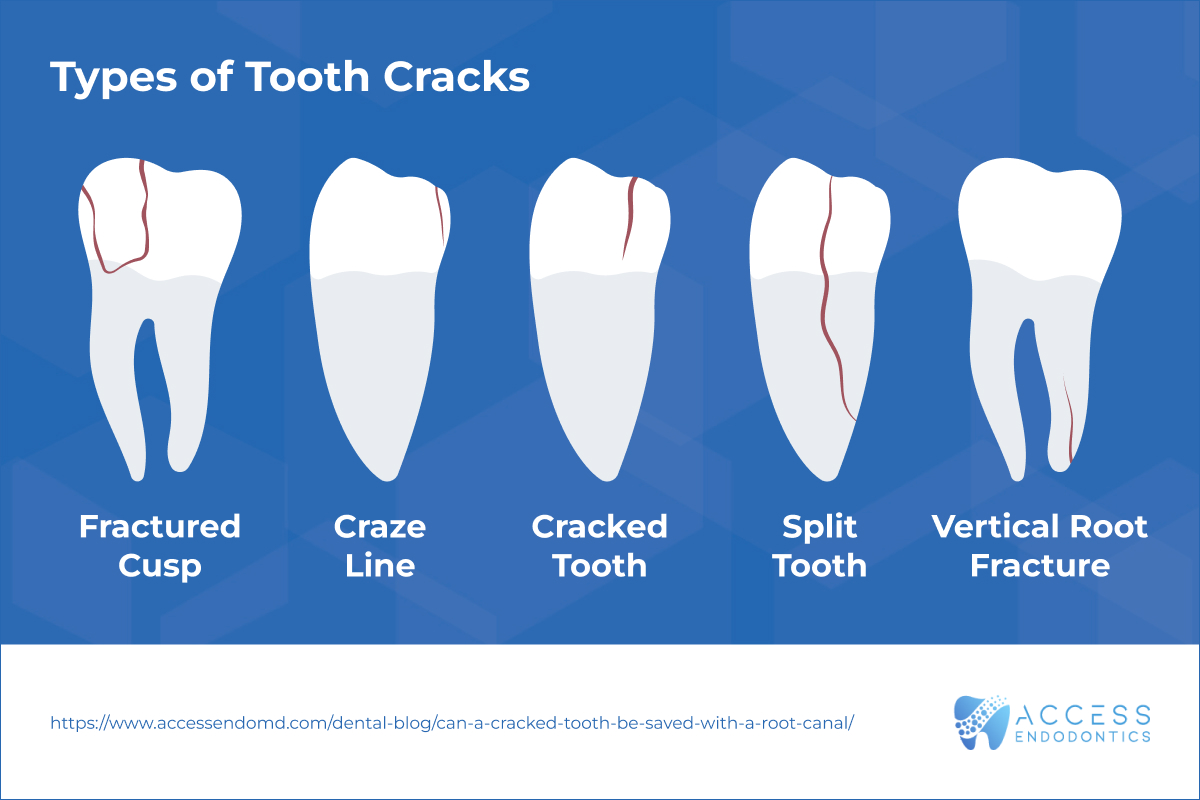
| Type of Crack | What It Means | Can It Usually Be Saved? | Possible Treatment |
|---|---|---|---|
| Craze lines | Tiny enamel cracks | Usually not a concern | Monitoring or cosmetic care |
| Fractured cusp | Part of chewing surface breaks | Often yes | Crown or filling |
| Cracked tooth | Crack extends toward root | Sometimes | Root canal + crown if pulp involved |
| Split tooth | Tooth separates into segments | Usually no | Partial saving or extraction |
| Vertical root fracture | Crack starts in root | Poor prognosis | Often extraction |
Because treatment depends on the type, location, and depth of the crack, a proper diagnosis by an endodontist is essential.
Symptoms that may mean a cracked tooth needs a root canal
If you’re wondering when a cracked tooth needs a root canal, certain symptoms can help you know when to visit an endodontist. Watch for:
- Pain when biting or chewing
- Pain when releasing pressure
- Sensitivity to hot or cold
- Lingering sensitivity after temperature exposure
- Pain that comes and goes
- Swelling or tenderness
- A visible crack or broken tooth
- A pimple-like bump on the gums
- Tooth discoloration
- Pain that worsens over time
Cracked teeth can be tricky because pain can be inconsistent, making an accurate diagnosis more difficult. If you have symptoms that come and go or pain when biting, schedule an evaluation as soon as possible.
How an endodontist determines whether the tooth can be saved
Determining whether a cracked tooth can be saved with a root canal requires a detailed and specialized evaluation. Cracks are not always visible and can vary widely in depth and direction, which is why expert diagnosis is essential. Endodontists specialize in diagnosing tooth pain and saving natural teeth.
At Access Endodontics, Dr. Lina Jarboe and the clinical team use advanced diagnostic technology to evaluate cracked teeth with precision, helping determine whether a root canal is the right solution.
An evaluation will typically include:
- Reviewing your symptoms and dental history
- Performing a clinical exam
- Conducting bite testing
- Testing pulp vitality
- Evaluating gum health and surrounding tissue
- Taking X-rays or using advanced imaging
- Assessing the direction and depth of the crack
- Determining whether the tooth can support a final restoration
Because every crack is different, seeing an experienced professional is one of the most important steps in deciding whether your tooth can be saved. You can visit an endodontist in Ellicott City right here at Access Endodontics.
What happens during a root canal for a cracked tooth?
A root canal for cracked tooth treatment is designed to remove infection and preserve the tooth.
- Diagnosis and treatment planning: Your endodontist evaluates the crack and determines if the tooth can be saved.
- Local anesthesia: The area is numbed to ensure a comfortable experience.
- Removal of damaged pulp: The inflamed or infected tissue inside the tooth is removed.
- Cleaning and disinfection: The root canal system is carefully cleaned and disinfected.
- Filling and sealing: The canals are filled and sealed to prevent reinfection.
- Restoration: A temporary or final restoration is placed.
- Crown placement: A crown is typically recommended to protect the cracked tooth and prevent further damage.
Advanced endodontic technology tools like laser-assisted irrigation and imaging technology improve precision and outcomes.
Root canal vs. crown for a cracked tooth: What’s the difference?
Many patients compare crowns vs. root canals for cracked teeth, but they serve different purposes. Many people receive both a root canal and a crown to repair a cracked tooth. Here are some things to keep in mind:
- A crown may be enough if the crack does not reach the pulp
- A root canal treatment is needed if the pulp is affected
- A crown is often placed after a root canal for protection
- Severe cracks may require extraction
| Treatment | What It Treats | When It May Be Used |
|---|---|---|
| Bonding | Minor chips or surface cracks | Cosmetic repair |
| Crown | Outer tooth structure | Protection and reinforcement |
| Root canal | Inner pulp and nerves | When infection or inflammation is present |
| Extraction | Non-restorable tooth | When damage is too severe |
What happens if you delay treatment for a cracked tooth?
Delaying care for a cracked tooth root canal situation can lead to worsening damage.
Risks include:
- The crack spreading
- Increased or constant pain
- Infection developing or worsening
- Damage to surrounding bone or tissue
- Tooth loss
Early cracked tooth treatment improves the chances of saving the tooth.
Can a tooth crack after a root canal?
Yes, a tooth can crack after root canal treatment, especially if the tooth was already weakened or not fully restored. Cracked teeth treated with a root canal often need a crown for added protection—treatment without a crown can leave the tooth vulnerable. Heavy biting or teeth grinding can also cause re-cracking.
If you get a root canal and have pain later, schedule an appointment. Even previously treated teeth can still be saved with endodontic retreatment.
How to protect a cracked tooth until your appointment
If you suspect you have a cracked tooth, contact an endodontic professional as soon as possible. Take these steps to prevent further damage until your appointment:
- Avoid chewing on the affected side
- Stay away from hard or sticky foods
- Do not place aspirin on the tooth or gums
- Use over-the-counter pain relief as directed
- Keep the area clean
Seek urgent care if you experience swelling, fever, or severe pain, as these can be signs of infection.
FAQs about root canals for cracked teeth
Yes, a root canal can be performed if the crack reaches the pulp, but the tooth structure is still restorable.
No. Minor cracks may only require cosmetic work, a crown, or monitoring. A root canal is needed when the pulp is affected.
No. Minor cracks may only require cosmetic work, a crown, or monitoring. A root canal is needed when the pulp is affected.
Yes, it often can if the crack does not reach the pulp. For cracks that don’t reach the pulp, treatments like bonding or a crown may be sufficient.
The crack may worsen, leading to infection, increased pain, and possible tooth loss.
Sometimes. Treatment depends on the location and severity of the new crack.
Yes. Endodontists specialize in diagnosing and treating cracked teeth and can determine the best course of action.
Schedule Cracked Tooth Treatment with Access Endodontics
If you’re dealing with a cracked tooth, early evaluation is critical.
Schedule an evaluation with Access Endodontics to find out whether your tooth can be saved and get expert care focused on preserving your natural smile.
Sources: