
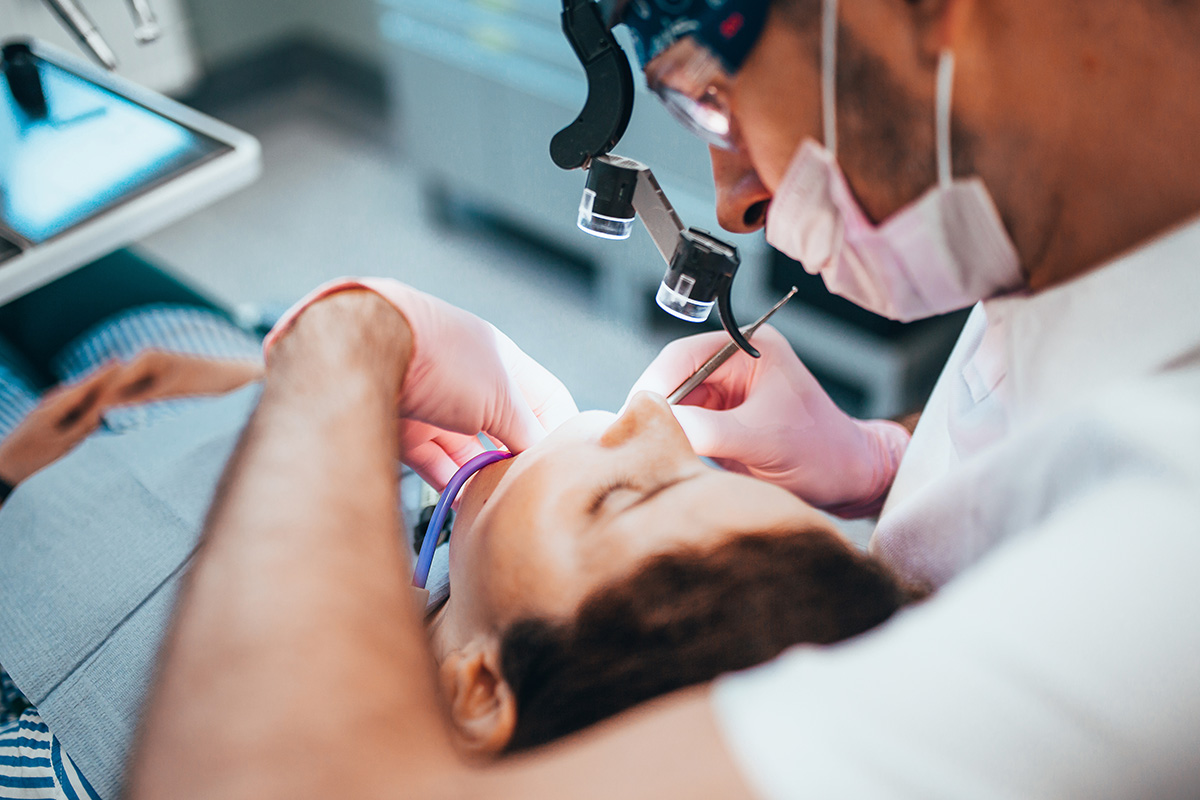
Most root canals take between 30 and 90 minutes. The exact time depends on which tooth is being treated and how complex the case is.
If you’ve been told you need a root canal, it’s normal to want specifics. How long will you be in the chair? Will it take more than one visit? What happens afterward?
Here’s what typically affects the length of a root canal procedure.
Factors that affect how long a root canal takes
Several factors determine how long your individual root canal treatment will take.
Which tooth needs treatment
Front teeth usually have one root canal. These cases are often more straightforward and can typically be completed more quickly.
Molars often have three or four canals. Each canal must be carefully cleaned, shaped, and sealed. Because of that added anatomy, treating a molar naturally takes longer than treating a front tooth.
Severity of infection
If there is a significant infection or abscess, additional time may be needed to fully disinfect the canals. The goal is to remove bacteria and create an environment where healing can begin.
In some cases, medication is placed inside the tooth before it is permanently sealed. That may require two visits rather than one.
Tooth anatomy
Every tooth is unique. Some canals are narrow or curved, which makes them more complex to navigate. Precision matters during a root canal procedure, and careful shaping and cleaning take time.
First root canal vs. retreatment
If a tooth has already had a root canal and symptoms return, it may need endodontic retreatment. During retreatment, the previous filling material must be removed before the canals can be cleaned again.
Cases that require endodontic retreatment are often more time-intensive because of that additional step.
What happens during a root canal
Understanding the steps can make the appointment feel more manageable.
The tooth is first numbed. Most patients describe the procedure as similar to getting a filling once anesthesia takes effect.
A small opening is created to access the root canal system. The infected or inflamed pulp is removed, and the canals are cleaned and shaped using specialized instruments. After cleaning, the canals are filled and sealed to prevent reinfection.
The full process of root canal therapy follows this structured process, with each stage focused on eliminating infection and protecting the tooth.
Dr. Lina Jarboe focuses exclusively on endodontic procedures using magnification, advanced imaging, and lasers to treat the inside of the tooth with precision. This focused approach often allows treatment to move efficiently while maintaining comfort.
Recovery time after a root canal
Root canal recovery time is usually short. Most people return to their normal routine the same day.
Mild soreness when chewing is common for a few days. Over-the-counter pain relievers are often enough to manage it. Your general dentist may recommend placing a crown to protect the treated tooth from fracture.
Most patients experience a predictable root canal recovery time, especially when aftercare instructions are followed closely.
Clear guidance on root canal aftercare helps protect the treated tooth while it heals.
Will I need one visit or two?
Most root canals are completed in one visit. Some cases require two appointments, especially when the infection is extensive or the anatomy is complex.
If two visits are recommended, it is usually to allow the medication inside the tooth to work before final sealing. Your endodontist will explain the reasoning before treatment begins.
Root canal treatment at Access Endodontics
Access Endodontics focuses on root canal treatment and other endodontic procedures. Dr. Lina Jarboe treats both routine and complex cases, including retreatment and surgical situations when needed. Laser-assisted techniques are frequently used to help reduce bacteria and support healing.
If you struggle with dental anxiety, the team prioritizes communication and support throughout every step of the process.
If your dentist has recommended a root canal, scheduling an evaluation can help relieve discomfort and prevent the infection from progressing. Reach out to us at 410.304.7226 or contact us online to get started.